Search Results
Katherine A. Spilde Papers on Native American Gaming
Identifier
Abstract
The Katherine A. Spilde Papers on Native American Gaming include materials collected by anthropologist Katherine Spilde about Native American gaming and the greater gaming industry. The materials date from 1789 to 2015, with the bulk of materials dating from 1995 to 2010. Materials dating from the eighteenth and nineteenth centuries are reproductions of key court opinions and treaties concerning Native American rights and sovereignty. The majority of the materials document Native American gaming following the passage of the 1988 Indian Gaming Regulatory Act (IGRA). The papers detail Native American gaming enterprises both on and off reservations, the socioeconomic impact of gaming, and the legislative history of Native American gaming in the United States. The papers include research and subject files created by Dr. Spilde during her employment with the National Gambling Impact Study Commission (NGISC), the National Indian Gaming Association (NIGA), and the Harvard Project on American Indian Economic Development (HPAIED). The collection includes socioeconomic reports; testimonies; correspondence; memos; press releases; photographs; audiovisual materials; promotional materials from casinos and tourist attractions; brochures; fact sheets; summaries; booklets; pamphlets; advertisements; tourism materials; journal articles; legal briefs; legislative documents; court opinions; Dr. Spilde’s notes; presentations; packets, agenda, schedules, and itineraries from conferences; periodicals; Native American and community newspapers; and newspaper articles. The collection includes materials about over one hundred federally recognized Native American nations. Also included are materials that document the socioeconomic impact of gaming, the international gaming industry, criminal activities related to gaming, advertising about gaming and casinos, lotteries, internet gaming, compulsive gambling, and bankruptcy as a result of gambling.
Archival Collection
Tax bills and receipts: Sadie George
Date
Archival Collection
Description
Text
Temple Beth Sholom 40th Anniversary Celebration invitation, April 23, 1988
Date
Archival Collection
Description
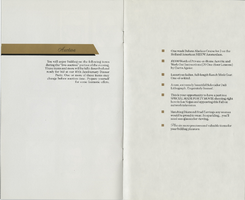
An invitation to Temple Beth Sholom's 40th anniversary celebration at the Alexis Park Resort in Las Vegas, Nevada.
Text

Craig Galati Interview, October 24, 2016: transcript
Date
Archival Collection
Description
always thought I'd be more urban. I would live in a downtown city. I wouldn't have a car. I would walk around. I would work on these big skyscrapers.” At one point in his life, architect Craig Galati dreamt of designing large buildings in some of the nation’s biggest cities. Instead, he was drawn back to his childhood home of Las Vegas, where he created projects meant to preserve the city’s integrity, such as the Grant Sawyer State Office Building and the first building at the College of Southern Nevada Charleston Campus. He speaks to his work in preservation at the Las Vegas Springs Preserve and in welcoming visitors to Mount Charleston with his Spring Mountains Visitor Gateway design. In this interview, Galati talks about his parents’ decision to move from Ohio to Nevada and what it was like growing up in Las Vegas. He recalls his first teenage jobs in the Las Vegas of his youth and his studies in architecture at the University of Idaho. He recounts the dilemma of struggling to find architecture work he enjoyed and how that vision drew him back to Vegas. He describes various projects in his portfolio from his early years to the present. He speaks highly of his partnership with Ray Lucchesi and the basis for their vision: “We wanted to be a place that everybody liked to work for. Buildings were just tools to do something grander. They weren't an object. We had a philosophy that was not object based, it was people based.”
Text

Transcript of interview with Frankie Perez by Elsa Lopez and Laurents Bañuelos-Benitez, November 5, 2018
Date
Archival Collection
Description
Frankie Perez (1986- ) is an individual that constantly found himself navigating two worlds, whether it was military versus civilian; female versus male; or being Latinx in the United States. As a result of this navigation, Perez has a unique perspective on our ever more complicated world that not many individuals possess. Perez served in the military during the Do Not Ask, Do Not Tell policy which made it difficult for someone dealing with gender identity, to seek out the proper support they need. Despite the policy, and other policies that were put in place afterwards to inhibit the transgender community in the military, Perez began his transition while still serving his country. In direct contradiction of popular opinion, Perez discovered that the military easily accommodated his transition. Outside of the military Perez is an active voice in the LGBTQ community. As a member of the LGBTQ, Latinx, and military community, Perez has a unique perspective that he uses to fight for both LGBTQ and Latinx rights. Currently, Perez is finishing his degree in gender and sexuality studies at UNLV. He hopes to use his education to help people have the difficult discussions and improve conditions for his communities.
Text

Jack Howard interview, February 27, 1977: transcript
Date
Archival Collection
Description
From the Ralph Roske Oral History Project on Early Las Vegas collection OH-00897. On February 27, 1977, collector Michael K. Ericksen interviewed his uncle, schoolteacher, Jack E. Howard, (born June 18th, 1920 in Dewey, Oklahoma) in his home in Overton, Nevada. This interview covers Mr. Howard’s personal experiences and recollections about Southern Nevada. Mr. Howard’s wife, Mrs. Helen Howard, is also present during this interview, which offers a thirty year local overview.
Text

Transcript of interview with Oscar Goodman by Claytee D. White November 10, 2014
Date
Archival Collection
Description
Oscar Baylin Goodman (1939- ) is the former mayor of the city of Las Vegas, Nevada, serving 12 years until 2011, when he swore in his wife of over 50 years, Carolyn Goodman. Oscar Goodman is the official ambassador of Las Vegas, and the chairman of the Las Vegas Convention and Visitors Authority (LVCVA) Host Committee. He is also known as one of the best criminal defense attorneys in the United States, and spent 35 years defending alleged Mob figures such as Meyer Lansky, Frank Rosenthal, and Anthony Spilotro. Goodman is the primary visionary and a member of the board of directors of The Mob Museum in downtown Las Vegas, which opened in 2012. Goodman was born June 26, 1939 in Philadelphia, Pennsylvania. He earned his undergraduate degree from Haverford College in 1961 and his law degree from the University of Pennsylvania Law School in 1964. That same year he moved to Las Vegas and in 1965 he was admitted to the Nevada State Bar. He served as Clark County?s chief deputy public defender from 1966 to 1967. Goodman was elected as mayor of Las Vegas for the first time in 1999. During his three terms (the legal limit), he contributed to the economic and cultural development of the downtown area by supporting projects such as the arts district and Union Park, a high-rise residential and business project he helped to secure 61 acres of land for. He helped to begin what he called the ?Manhattanization? of downtown, which included the construction of taller buildings for better use of the area?s prime real estate. In this interview, Goodman discusses the role of Judaism in his life, from childhood to adulthood to parenting his own four children. He touches on his involvement with Temple Beth Sholom, including serving as its president, as well as in local development projects like the Lou Ruvo Cleveland Clinic Brain Health Center, Smith Center for the Performing Arts, and Mob Museum. In addition, Goodman discusses the impact of Jewish residents on the city and its development, and mentions leaders in the gaming industry, legal profession and in politics.
Text

Transcript of roundtable interview with the Holocaust Resource Center: Myra Berkovits, Susan Dubin and Doug Unger, by Barbara Tabach, September 4, 2014
Date
Archival Collection
Description
Interview with Myra Berkovits, Susan Dubin and Doug Unger of the Holocaust Resource Center. In this interview, the group discusses the beginnings of what is now the Sperling Kronberg Mack Holocaust Resource Center. Edythe Katz-Yarchever is discussed as the catalyst for establishing the center and getting others involved with the Governor's Advisory Council on Education Relating to the Holocaust. Berkovits talks about her role as a liason for Holocaust education in the Clark County School District and the student-teacher conferences held each year with funding from Sheldon Adelson. Unger discusses expanding the outreach to the Washoe County School District with assistance from Atlantis Hotel (Reno, Nev.) owner, John Farahi and Judy Mack. They talk about the previous locations of the Holocaust Resource Center on Maryland Parkway, then Renaissance Drive, and the affiliation with the Jewish Federation and the Jewish Family Service Agency. After funding and personnel issues around 2011, the advisory council and the library went through a re-structuring and hired Susan Dubin who organized and catalogued the library collection. The library is now accredited by the Association of Jewish Libraries.
Text