
Search Results
Newspaper clipping, More trouble snags valley water line right-of-way plans, Las Vegas Sun, April 18, 1954
Date
Archival Collection
Description
Copied onto Las Vegas Valley Water District stationery with a date stamp from the law department of the Union Pacific Railroad Company, an article from the Las Vegas Sun newspaper reports that the water district's plan to lay a pipeline from Henderson to Las Vegas may be endangered because of lack of a right-of-way.
Text
Letter from F. H. Knickerbocker (Los Angeles) to F. R. McNamee, March 7, 1929
Date
Archival Collection
Description
Knickerbocker directing the drafting of contracts for the sale of water directly from the railroad to industrial users. Date stamp from L.A. & S.L. R.R. Co., Office of Industrial Engineer, Los Angeles, Calif. and from W.H.J.
Text
Bill of sale from Los Angeles & Salt Lake Railroad to Union Pacific Railroad Company for water production and transmission facilities, 1953
Date
Archival Collection
Description
Bill of sale by the grantor, Los Angeles & Salt Lake Railroad Company to assign, transfer, and convey to the grantee, Union Pacific Railroad Company water production facilities including springs, spring houses, water wells, settling basins, reservoirs, storage tank, pipe lines, pumping stations, as well as transmission facilities including power lines, transmission lines, telephone and telemeter line, and other facilities. Approved May 19, 1953. Signed July 17, 1953. Map outlining conveyed land, pipe lines and wire lines is referenced below.
Text

Letter from Walter R. Bracken (Las Vegas) to F. H. Knickerbocker (Los Angeles) regarding water service for industrial sites, June 4, 1931
Date
Archival Collection
Description
Since the water company could not meter the water, Bracken would conduct a survey of the new users to try and determine how much water each will require so they could establish rates for them.
Text
Letter from R. L. Adamson (Los Angeles) to William Reinhardt, March 6, 1952
Date
Archival Collection
Description
Discussion about transferring the 2.5 CFS granted to the Union Pacific Railroad company from Well No. 1 to the shop well, and increasing the capacity of the well to produce that amount.
Text
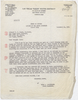
Letter from Hugh A. Shamberger (Carson City) to Colonel H. F. Clark (Las Vegas), December 11, 1951
Date
Archival Collection
Description
Shamberger advised the Water District to purchase the lands surrounding the Las Vegas Springs as well as other springs and wells in the area to protect its water sources in the future.
Text
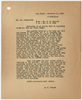
Letter from A. M. Folger (Las Vegas) to William Reinhardt, November 17, 1950
Date
Archival Collection
Description
Lessees of the Las Vegas Ranch quit paying their rent when the water to the ranch quit flowing. Upon being reminded of the terms of the lease, they paid the rent, but asked for future water delivery plans.
Text
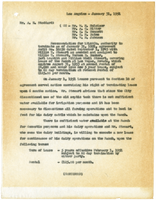
Letter from William Reinhardt (Los Angeles) to A. E. Stoddard, January 31, 1951
Date
Archival Collection
Description
Willie T. Stewart was terminating the lease due to insufficient water on the ranch. He was willing to sign a new lease given the listed terms. Letter refers to outlined areas noted on map referenced below.
Text
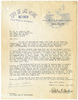
Letter from Howard W. Cannon (Las Vegas) to W. H. Johnson (Las Vegas), April 17, 1951
Date
Archival Collection
Description
The irrigation practices on the Las Vegas Ranch were being blamed for the mosquito problem in Las Vegas, and the Las Vegas Land and Water Company was being asked to address it.
Text
Letter from William Reinhardt to G.F. Ashby, October 11, 1948
Date
Archival Collection
Description
Reinhardt recommends that the water company remain non-committal about the creation of a water district in Las Vegas until it is clear how it would affect the interests of the Union Pacific Railroad Company.
Text