
Search Results
University of Nevada, Las Vegas Creative Services Records (2000s)
Identifier
Abstract
This is part 4 of 6 finding aids for the University of Nevada, Las Vegas Creative Services Records and represents 2000 to 2009. Generally, materials are transferred from UNLV Photo Services to UNLV Special Collections and Archives 5 years after they are created. For materials within the last 5 years, contact photo@unlv.edu or call 702-895-3036. This finding aid contains the contact sheets and digital files produced by the University of Nevada, Las Vegas from 2000 to 2009 as an official record of the institution's development, activities, and community. Clients include UNLV colleges and departments, the University's administration, the UNLV Foundation, athletic departments, and the Nevada System of Higher Education (NSHE). Images include academic activities, athletic events, faculty and administration, student life, campus life, campus development, architecture, and public relations.
Archival Collection
Women's Research Institute of Nevada (WRIN) Oral History Records
Identifier
Abstract
The Women's Research Institute of Nevada (WRIN) Oral History Records (1995-2015) are comprised of Dr. Joanne Goodwin's research, communication, and publicity relating to the Las Vegas Women Oral History Project. The records include correspondence, photographs of interview participants, news clippings, and working drafts of transcripts. The records also contain oral history interview documentation for projects in which WRIN and Joanne Goodwin provided assistance and consultation.
Archival Collection
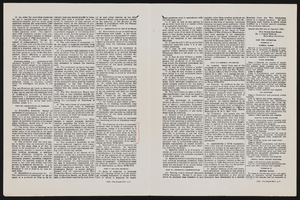
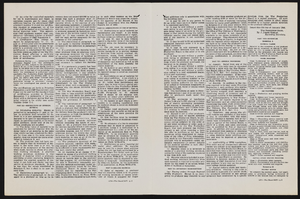
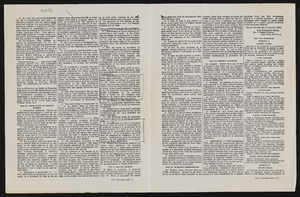

Transcript of interview with Christopher Phipps by Dennis McBride, November 6, 1998
Date
Archival Collection
Description
Christopher Phipps, attorney in Las Vegas discusses his life. Hailing from Honolulu, Hawaii, and his adventure that led him to Las Vegas, Nevada.
Text

Transcript of interview with Brian Cram by Stefani Evans and Claytee White, October 28, 2016
Date
Archival Collection
Description
Throughout his career, former Clark County School District Superintendent (1989–2000) Brian Cram took his father's words to heart. He heard them repeatedly over the years as he watched and later, helped, his father clean classrooms at Robert E. Lake Elementary School: this place—the classroom—this is the most important place. Cram was born in Caliente, where his father worked on the railroad. In 1939, when Cram was a toddler, the family moved to Las Vegas and his father found work first as a sanitation engineer at a hospital, and then at CCSD as a custodian. The elder Cram, who spent his formative years in the Great Depression, prided himself on doing "good, honorable work" as a custodian, because the work—the classroom—mattered. Even so, he wanted more for his son. Cram largely ignored his father's advice during his four years at Las Vegas High School, where he ran with The Trimmers car club, wore a duck tail and a leather jacket, and copped an attitude. Cram's swagger, though, d
Text

Ricardo Torres-Cortez interview, May 7, 2019: transcript
Date
Archival Collection
Description
Interviewed by Barbara Tabach. Monserrath Hernández and Maribel Estrada Calderón also participate in the questioning. Born in Mexico, came to live in Las Vegas in 1985. Graduate of UNLV in Journalism and a reporter of Public Safety for the Las Vegas Sun. Ricardo covered the 1 October shooting, the killing of two police officers and other traumatic news of the community.
Text

Transcript of interview with Carl Ciliax by Gary Wood, March 8, 1980
Date
Archival Collection
Description
On March 8, 1980, Gary Wood interviewed Carl Ciliax (born 1941 in Las Vegas, Nevada) about his experiences living in Nevada. Ciliax first describes his family history, his early interests in wildlife, and his background and education in artwork. Ciliax then discusses his early experiences in hunting and his eventual interest in conservationism and preservation, including his involvement with organizations that sought the protection of desert bighorn sheep and the protection of wildlife in general. The two talk more about wildlife, the early development of Las Vegas, and the effects of the atomic testing. The interview concludes with Ciliax’s recollection of recreational activities and some of his thoughts on conservationism.
Text

Transcript of interview with Phyllis Webb Clark by Lorna Suzette Clark, April 7, 1976
Date
Archival Collection
Description
On April 7, 1976, Lorna Suzette Clark interviewed her mother-in-law, Phyllis Webb Clark (born 1928 in Los Angeles, California) about her experiences from living in Las Vegas. The two first discuss education, the various address at which Phyllis lived, and the early development of the Strip and Downtown areas. The interview then covers the visits of important individuals, forms of transportation, the effect of World War II on the economy, and the effects of the growing town on hospitality and courteousness. Phyllis also mentions the Helldorado Parade, her involvement in Boy Scouts and Girl Scouts, and recreational activities. The interview concludes with a discussion on the atomic testing, the Stewart Ranch, and floods in Las Vegas.
Text