
Search Results
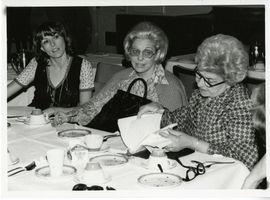
Photographs of Israel Independence Day Celebration planning, Las Vegas (Nev.), 1973
Date
Archival Collection
Description
Rochelle Hornsby and others planning for an Israel Independence Day celebration for Temple Beth Sholom in Las Vegas, Nevada.
Image

Photographs of Temple Beth Sholom belly dancers, Las Vegas (Nev.), 1974-1982
Date
Archival Collection
Description
Various photographs of Temple Beth Sholom belly dancers at the International Belly Dancers Convention at the Aladdin Hotel in Las Vegas, Nevada.
Image

Photographs of Len and Rochelle Hornsby, 1973-1978
Date
Archival Collection
Description
Various photographs of Len Hornsby, Rochelle Hornsby, and others in Las Vegas, Nevada.
Image
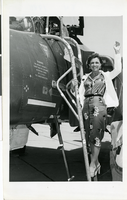
Photographs of Rochelle Hornsby, early to mid 1980s
Date
Archival Collection
Description
Two photographs of Rochelle Hornsby from the Las Vegas Chamber of Commerce. The first image depicts Hornsby standing of a ladder of an F4 at Nellis Air Force Base, while the second image is a portrait photograph from the Las Vegas News Bureau.
Image
Rochelle Hornsby papers: photographs, clippings, and ephemera, 1970-1986
Level of Description
Archival Collection
Collection Name: Rochelle Hornsby Papers
Box/Folder: Box 01
Archival Component
Nancy Lough oral history interview, 2024 September 16, 2024 October 14
Level of Description
Scope and Contents
Oral history interview with Nancy Lough conducted by Claytee D. White and Stefani Evans on September 16 and October 14, 2024 for the Game On! The Oral History of Las Vegas Sports project. In this interview, Lough talks about women in sports, her personal athletic journey, her Sport Management Program and research at UNLV, and the impact of sports on the city of Las Vegas. She recalls her early life in Colorado, where she played many sports and eventually ran cross country for Adams State College in the 1980s. In 1988, she moved to Texas to work as a graduate assistant for Peggy V. Hill had the opportunity to coach the cross country team at the very beginning of their season. After that experience, Lough went on to coach various other teams and enjoyed tremendous success, but later shifted her focus and came to UNLV to start their Sports Management Program, which is still a successful program to this day. Digital audio and transcript available.
Archival Collection
Collection Name: Game On! The Oral History of Las Vegas Sports Interviews
Box/Folder: Digital File 00
Archival Component
Leon Symanski oral history interview, 2024 July 23
Level of Description
Scope and Contents
Oral history interview with Leon Symanski conducted by Claytee D. White and Stefani Evans on July 23, 2024 for the Game On! The Oral History of Las Vegas Sports project. In this interview, Symanski, a three-time UNLV graduate, recalls his childhood in Southern California and his early relationship with sports. He recalls playing basketball in high school, college, and being recruited by UNLV coaches, who offered him a scholarship with a well-defined role as a backup player. He understood his role and played with the Runnin' Rebels two seasons (1984-87), including UNLV's second Final Four Team. In this interview, Symanski discusses the celebrity status the team enjoyed; coach Jerry Tarkanian's work ethic and method of teaching and preaching after every practice, coach Tim Grgurich's inspirational style, and the role a coach plays in a player's life. He talks about his ten years in hospitality that began with summer jobs at Paul-Son Gaming, working at the Tropicana and Luxor Hotels, before joining the first class at UNLV Boyd School of Law. Finally, he recalls the indoor basketball city leagues run by the Clark County Department of Parks and Recreation. Digital audio, photographs, and transcript available.
Archival Collection
Collection Name: Game On! The Oral History of Las Vegas Sports Interviews
Box/Folder: Digital File 00
Archival Component
Peter Bernhard oral history interview, 2024 August 13
Level of Description
Scope and Contents
Oral history interview with Peter Bernhard conducted by Claytee D. White and Stefani Evans on August 13, 2024 for the Game On! The Oral History of Las Vegas Sports project. In this interview, Bernhard recalls his Las Vegas childhood and school years, and playing both baseball and football. He remembers playing baseball at Circle Park before the City of Las Vegas Recreation Department began to organize a City municipal baseball league. They played at Squires Park, at Casino Center near 4th Street; then Cragin Park at Charleston and Hinson; Lyons Park at East Washington and Bruce Street (the first park with a home run fence), and Hadland Park at Eastern and Stewart. Bernhard also describes how the Donna Kutzen Youth Foundation (DKYF), promoted by Marty Kutzen to honor his deceased wife, facilitated team sports in Las Vegas. Bernhard talks about playing for the winning state football champions Western High School (1966-67), playing football and baseball at Harvard University, and how sports connected him to people like Harry Reid and Roy Woofter. Digital audio, transcript, and photographs available.
Archival Collection
Collection Name: Game On! The Oral History of Las Vegas Sports Interviews
Box/Folder: Digital File 00
Archival Component
Mason Gordon oral history interview, 2024 September 04
Level of Description
Scope and Contents
Oral history interview with Mason Gordon conducted by Claytee D. White and Stefani Evans on September 4, 2024 for the Game On! The Oral History of Las Vegas Sports project. In this interview, Gordon recalls his childhood and early years in California playing basketball, later earning a B.A. in Philosophy and History from Claremont McKenna University. After graduation, he began writing for Tollin/Robbins Productions, co-founded by Mike Tollin, as the company's weekend basketball commentator. Tollin then co-founded Mandalay Sports Media, which became Mike Tollin Productions, a sports-focused media company. At Mandalay Sports Media, Gordon served as producer, executive producer, and eventually, president. Gordon describes later approaching Tollin about creating a new sport: SlamBall. The partners built a court in a warehouse in East Los Angeles, became certified to train, developed new equipment, and recruited athletes for their new sport. In 2023, Gordon moved to Las Vegas, Nevada in the hopes of riding the “new sports wave” in the city. To that end, Derek Stevens (Circa) is a founding partner in the first SlamBall league. Besides relaunching SlamBall at Cox Pavilion in 2023, Gordon also wants to help write a curriculum for sports business. Digital audio and photographs available; no transcript available.
Archival Collection
Collection Name: Game On! The Oral History of Las Vegas Sports Interviews
Box/Folder: Digital File 00
Archival Component
Ron Futrell oral history interview, 2024 September 30
Level of Description
Scope and Contents
Oral history interview with Ron Futrell conducted by Claytee D. White and Stefani Evans on September 30, 2024 for the Game On! The Oral History of Las Vegas Sports project. In this interview, Futrell recalls arriving in Las Vegas, Nevada in 1984 from Washington state where he had worked as a sportscaster. Growing up, Futrell shares he had a love of baseball, football, and basketball. He recalls attending Mt. San Antonio College in California as a communications/broadcasting major, and worked in sports journalism ever since. Three days after he arrived in Las Vegas, he reported on the Jazz v. Lakers game at the Thomas & Mack and interviewed Kareem Abdul-Jabbar after the player broke the all-time scoring record. Futrell remembers having to learn about sports betting and about emceeing a 1984 Las Vegas Gold Swim Team fundraiser with Frank Rosenthal. He describes the years-long tension between UNLV Administration, Athletic Directors, and Jerry Tarkanian in a time when sports reporters had to “choose sides.” He describes the salary scandal surrounding basketball coach Rollie Massimino and a "cam scam" in Tark's final year, when a camera was hidden in an air duct in UNLV's North Gym to film a conditioning class. Futrell's relations with UNLV temporarily soured when he broke the 1998 story about UNLV Athletic Director Charlie Cavagnaro using racist and sexist language in describing black and female athletes. However, he later taught for three years in the School of Communications. Digital audio available; no transcript available.
Archival Collection
Collection Name: Game On! The Oral History of Las Vegas Sports Interviews
Box/Folder: Digital File 00
Archival Component